.svg)
Powered by Keepgo
Powered by Keepgo
Published on:
October 4, 2026
Tags:
eSIM
Enterprise
Business trips are a frequent occurrence. If you’re a consultant working with Fortune 100 firms, a project manager visiting construction sites, or someone in finance doing audits, face-to-face is still necessary. Now expand that to 20-40+ employees and call it a business, and airline tickets become almost a necessary expense. And sometimes, companies add connectivity as a second necessary expense, too.
Although it’s okay for employees to take on the connectivity burden and buy eSIMs or regular SIMs, that doesn't work when trips are frequent. They have to deal with roaming fees, high prices, and overspending. Instead, companies often offload this through enterprise eSIM management to avoid similar problems and frequent contract negotiations.
Because managing connectivity involves many components, it’s important to approach it with the right information, and we prepared this article to guide you through it.
Enterprise eSIM management is the practice of provisioning, monitoring, and controlling eSIM connectivity for a company's devices from a single, centralized platform. You don’t handle data plans, activations, and billing separately for every device; you manage absolutely everything from a dashboard.
The concept doesn’t revolve around each personal or travel eSIM your employees have; it's about selecting optimally priced bundles for the trip and managing them afterward. It also doesn’t imply the platform is general mobile device management (MDM) software that controls what's installed on a device.
Instead, it is a holistic solution created by MVNOs or providers for managing their eSIM products. In our case, the esimba.ai platform is a full-scale web application with a wide variety of management capabilities. It’s closely tied to our API, and you can recreate the same functionality by building your own dashboard.
We’ve already explained that enterprise eSIM management helps solve problems for large companies. If you have one office and a single carrier, then you don’t even have to worry. But if you have a multinational presence and employees fly regularly, that’s a different story, and you should consider a connectivity platform.
In practice, any such platform can help a large business solve the following:
A platform should do four things: get a device connected, give IT or the responsible department one place to see and control every line, help keep connectivity flowing, and report back all relevant data points. But not all of them are made equal, so let’s take ours as an example and see what you can do as a registered partner.
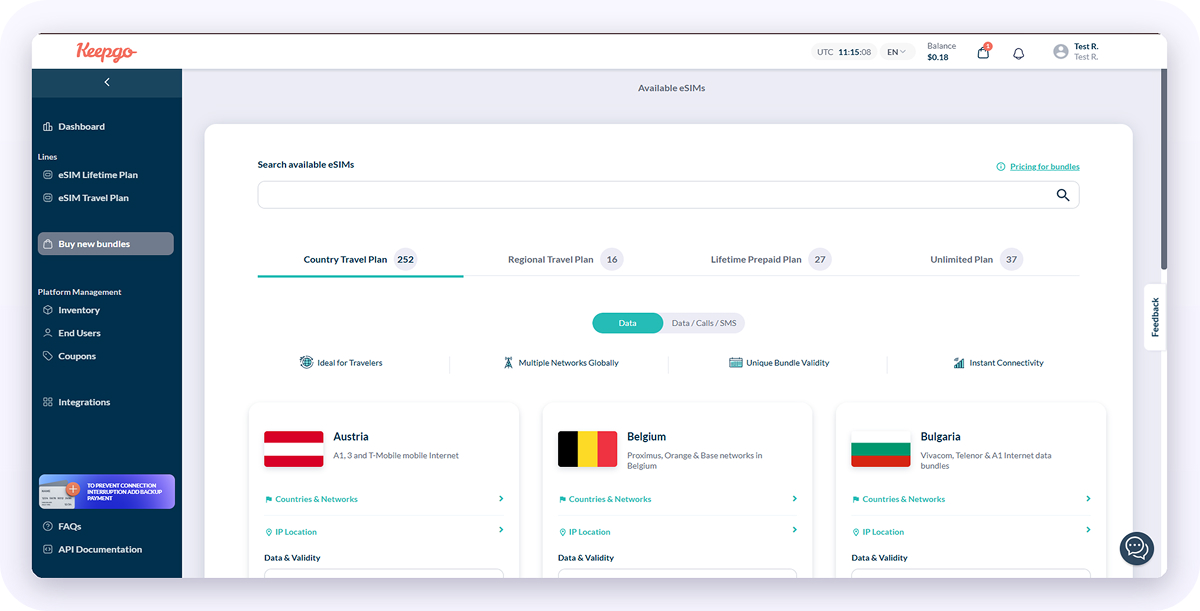
As soon as you get access, you can start purchasing any bundle you like. We offer four distinct plans at esimba.ai, thoroughly described on our site. Each bundle will then appear in the “Line”, separated by plan. You need to click on the plan name, and then you’ll see all bundles you currently owe and their status, activation and creation dates, etc. Reference the screenshot below for how it looks.
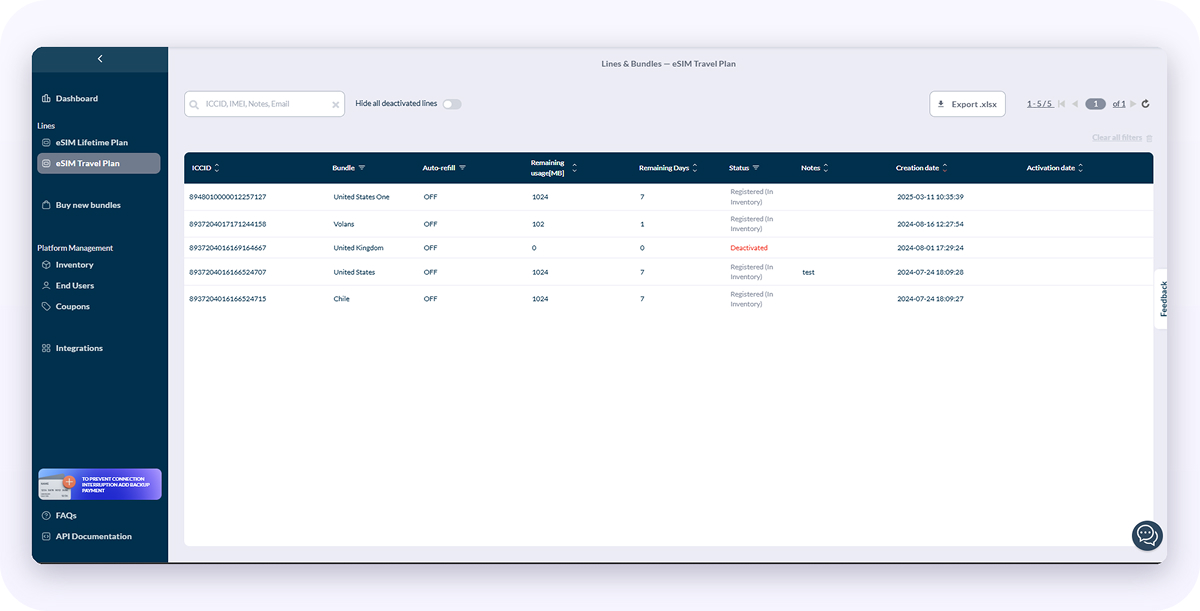
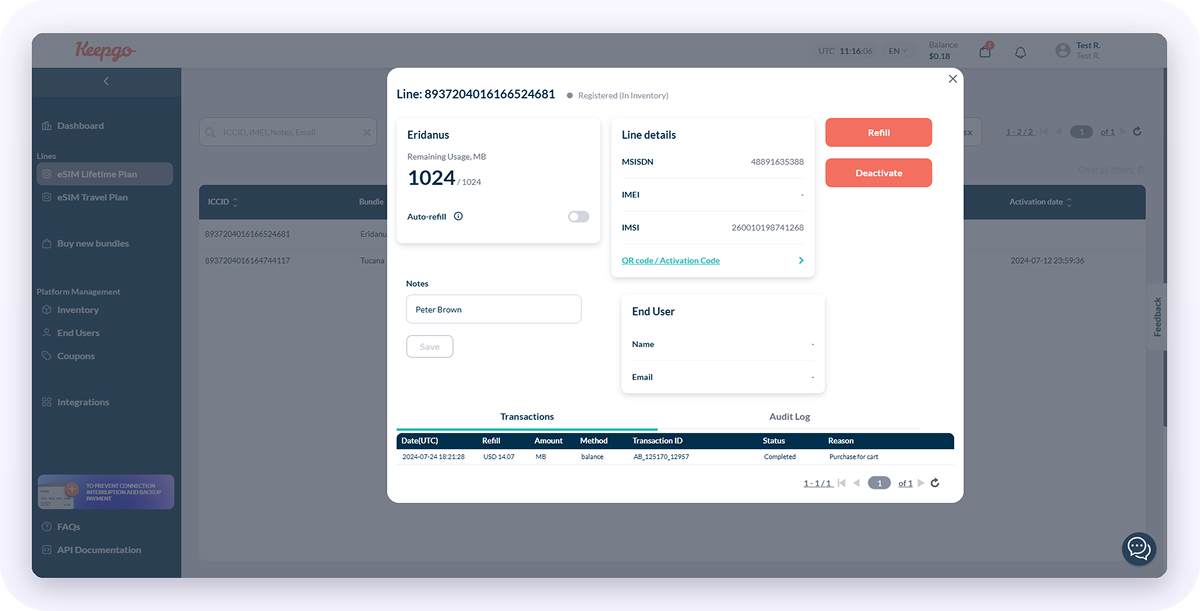
Upon purchase, the bundle can be assigned to any individual employee or end user through QR codes you get on the platform. Alternatively, you could set up an internal dashboard or webstore without the front end for your employees to register and assign bundles to themselves. You can use the API or our development services to make it happen. No matter the method, you will always be able to see which bundle belongs to which user.
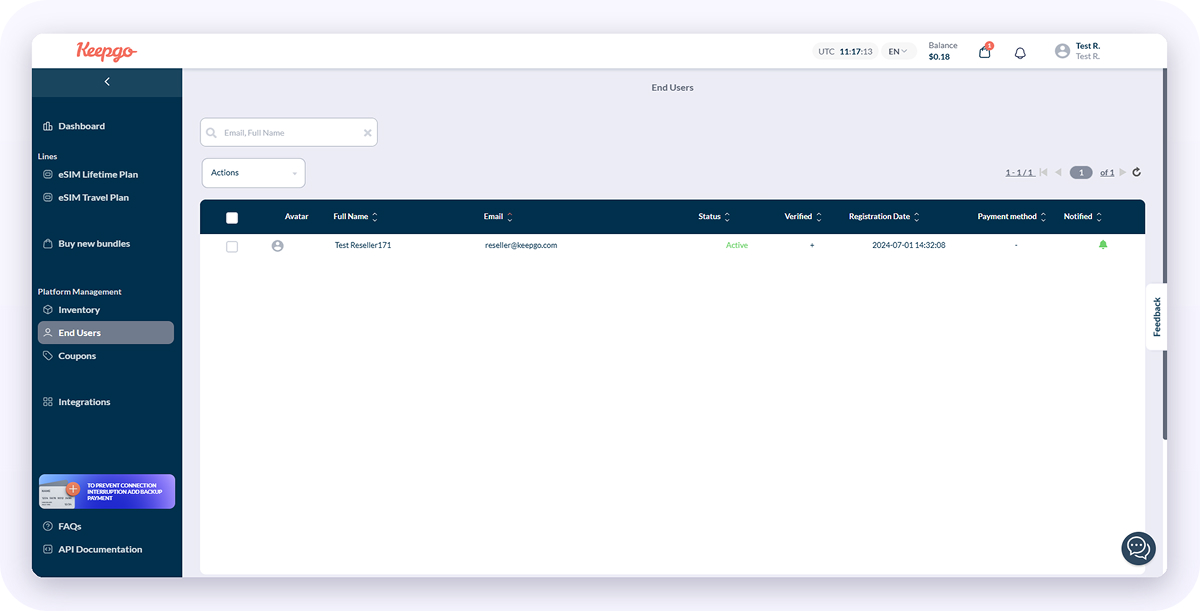
As soon as the user is registered, they immediately get added to the database. You can view all your current users in the “End Users” tab on the platform and manage them: delete or deactivate their account. You can also monitor what they do with the bundles.
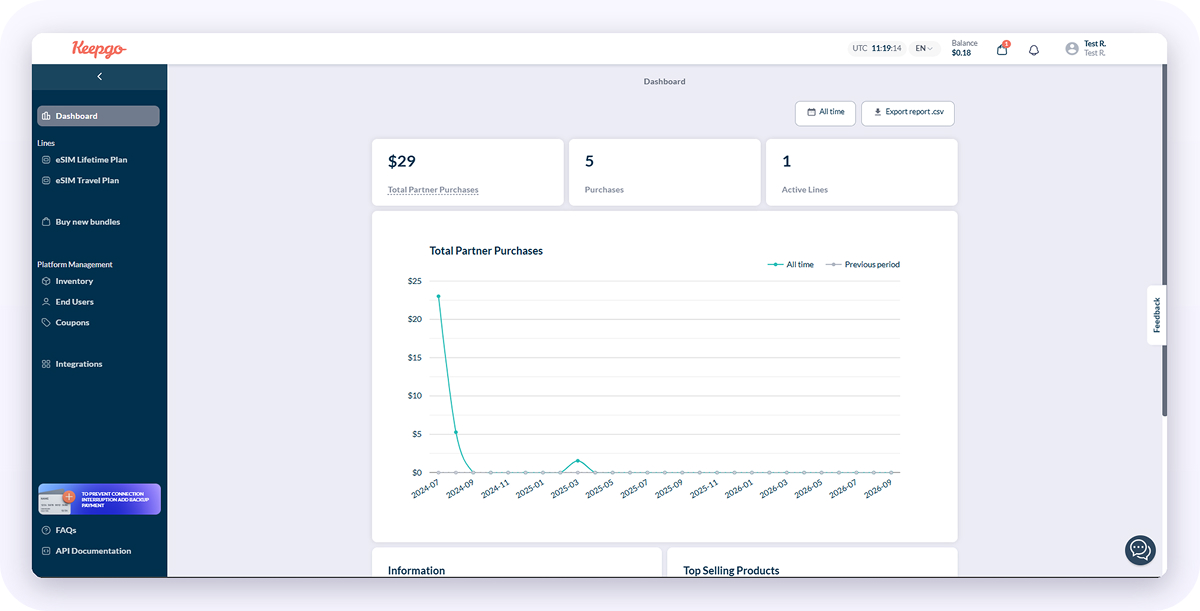
If you go back to the “Bundle Assignment” screenshot, you’ll notice you can configure an automatic refill for each line. You choose the amount of data you want topped up as soon as overall allowance drops to 500 Mb, and can additionally configure bill protection by setting a limit on excessive charges. If you got ot the dashboard tab, you get access to analytics: total amount spent, lines purchased, and transactions made.
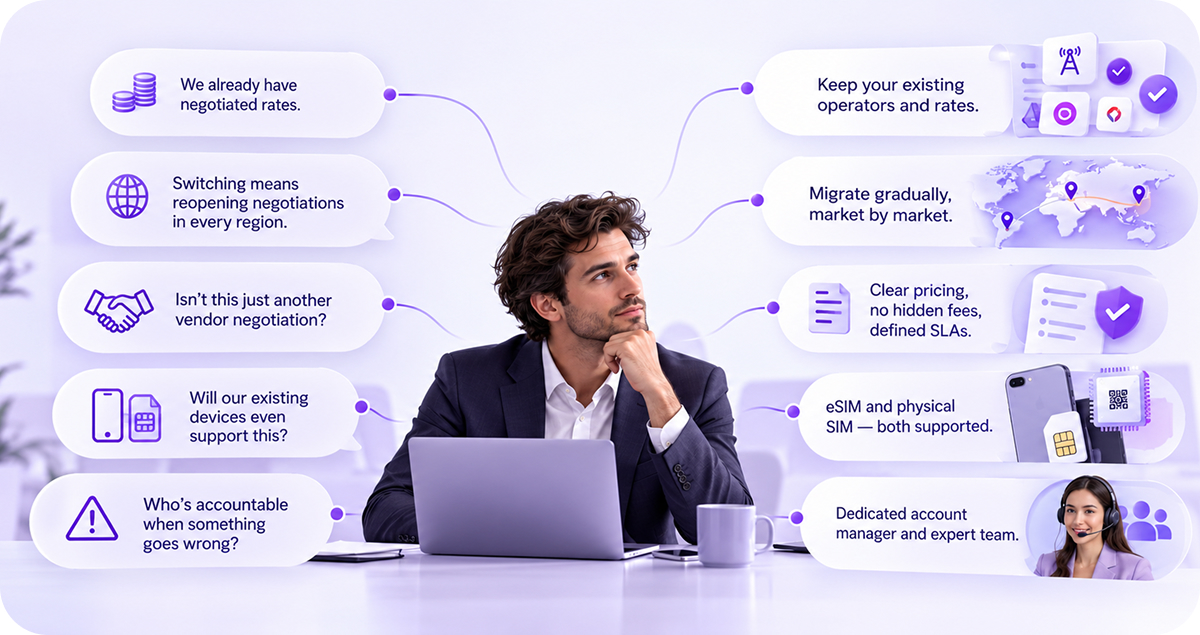
Before even really considering switching, lots of enterprises think about how inconvenient it will be. The primary reason is that they already negotiated with one or several major telecom providers and worked out mutually beneficial deals, just like they would with an airline. That’s a legitimate starting point and can still be properly addressed during integration.
"We already have negotiated rates through direct contracts with our telecom providers."
Switching doesn’t mean walking away from those deals, especially with our policies at esimba.ai. You can still integrate existing operators, keep your quoted rates, and only purchase our bundles when you see fit, as we always try to keep our pricing competitive. If not, we have an experienced dev team on standby and can help develop internal connectivity solutions.
Even if you have to negotiate or outright cancel contracts, the switch will be slow. Migration tends to happen market by market, timed to when an existing contract is up for renewal or has an exit clause, rather than as a single cutover.
In a way, this is the right assessment, and you should hold your new provider to the same if not higher, degree of standard. They should at least offer clear pricing, no hidden fees, defined SLAs, and a straightforward way to see and control spend.
If your new provider only offers eSIMs, then the device should be able to support them. If your employees use devices with SIMs or prefer them over the digital counterparts, esimba.ai supports hybrid strategies and can provide both at your convenience.
Although we can’t speak for every provider, there’s likely going to be a dedicated account manager. On our end, it will be a sales team member, and you’ll keep in contact with them and the wider team as necessary.
Once a business has moved past the initial hesitation, the actual evaluation comes down to a handful of concrete questions:
Although you’re always free to choose your own provider or platform, we’ll use this article to demonstrate our expertise and offer our services and products. esimba.ai has been on the market for 15+ years and knows how to properly handle enterprise eSIM or pSIM management.
Our connectivity solution catalogue is vast, with four distinct plans tailored to specific situations. After egistering on our platform, you can add and remove users, carefully monitor usage, control costs, automate, and consult with the account manager if you need certain features or would like us to develop something for you.
All our corporate partners never have to worry about negotiating contracts, as we offer coverage across 150+ countries. Plus, we offer 10% and 15% discounts and wholesale rates. If any of this sounds interesting, reach out to us today to learn more.
.svg)
As a global MVNO, esimba.ai, a subsidiary of Keepgo, provides you with the opportunity to offer your customers top-quality connectivity in 150+ countries.
.svg)


